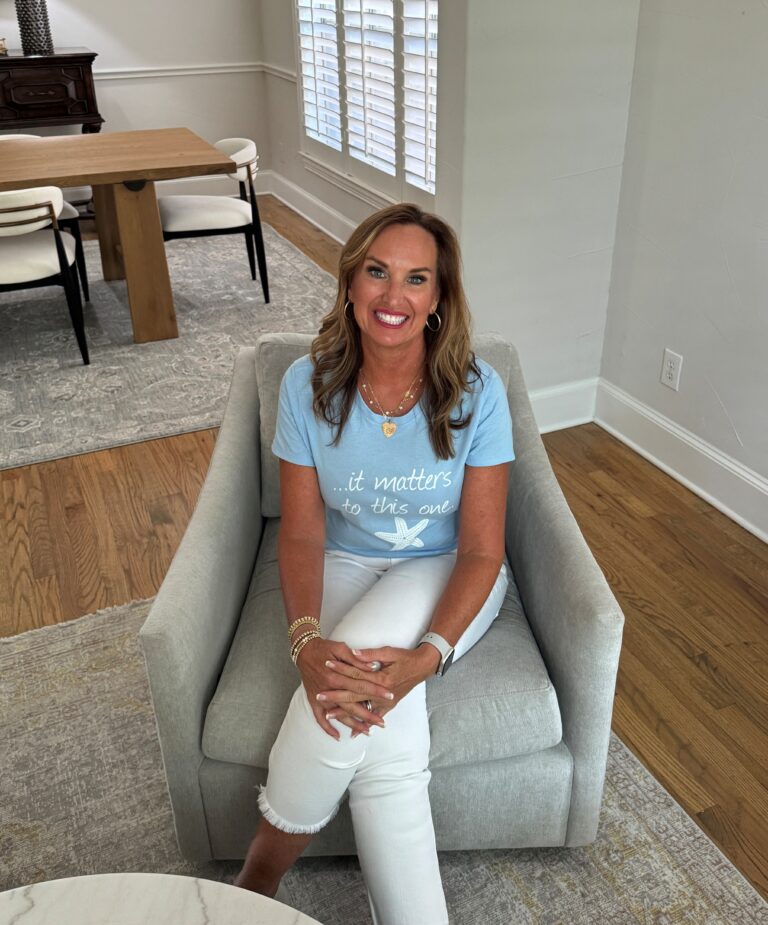
By the time Advocate Lynn Dalleske began her CASA training in 2020, COVID-19 was in full swing. Training had moved entirely online, and CASA staff and volunteers were adapting to a new way of doing things. Despite the unusual circumstances, Lynn completed her training and began what would become six years (and counting) of dedicated advocacy for children in Denton County.
Over the years, Lynn’s attention to detail has become a hallmark of her work. Whether it is acquiring hard-to-get medical records that others might overlook, or working with a child’s family to get a comprehensive view of a child’s life, Lynn’s advocacy leaves no question unanswered.
She found her niche advocating for babies and children under the age of five. Her tenacity and attention to detail are especially important when working with children who are too young to communicate their needs or speak up for themselves.
“Sometimes, they have no one sticking up for them,” Lynn said. She knew she could help fill that gap, identifying the needs that might otherwise go unnoticed and making sure someone was focused solely on the needs of the child.
Lynn recalls a case she worked wherein a two-year-old was experiencing behavioral challenges. While others brushed off the concerns as ‘just two-year-old behavior,’ Lynn wasn’t willing to overlook them. She was adamant that the child needed therapy to help them process the trauma they experienced, and she helped make sure the child got it.
Her Casework Supervisor, Lucy, has seen that determination firsthand.
“[Lynn] is relentless in her pursuit of information, answers, and resources that benefit the children she represents. She follows through on every concern, asks the difficult questions, and refuses to let issues go unresolved.”
For Lynn, it is important that nothing gets missed.
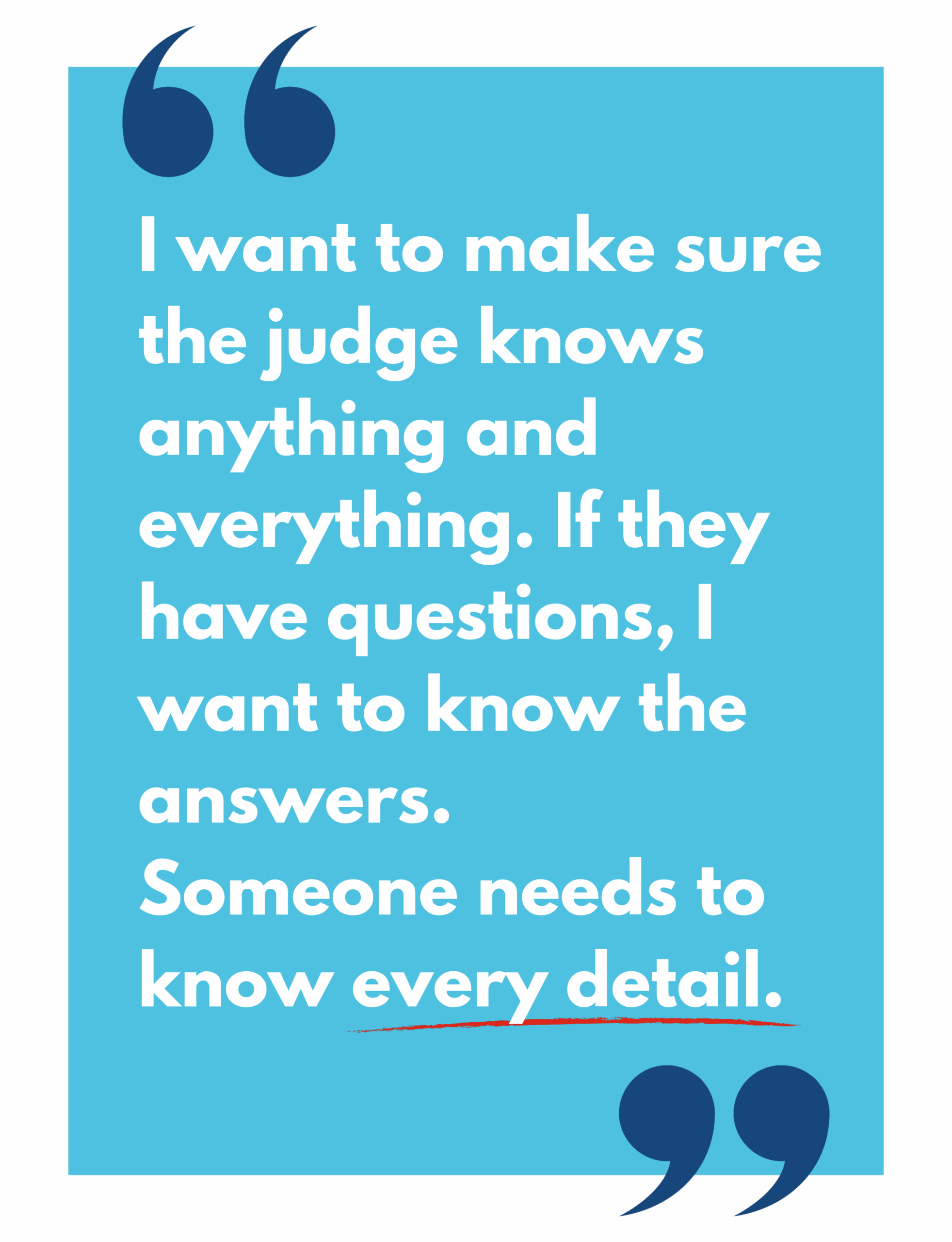
“I want to make sure the judge knows anything and everything. If they have questions, I want to know the answers,” she explained. “Someone needs to know every detail.”
But that level of dedication doesn’t come without its challenges. Over time, Advocates develop meaningful connections with the children they serve, but being a CASA also means understanding the boundaries that come with the role. “You have to separate yourself from your cases emotionally,” she says. “You never get to wear another hat. You have to stay their CASA. You can’t be their friend or their babysitter,” Lynn explained.
When the case comes to an end, those boundaries can be especially difficult. CASA volunteers aren’t permitted to reach out to the children after case closure. While children may reach out to their former advocates and maintain a connection, that contact must be initiated on the child or family’s terms.
“You may never see the rewards,” Lynn says of her work as a CASA.
Still, she finds comfort in knowing the impact she’s made, even if she never gets to see the full picture. “You come into a child’s life at their lowest point, and know you make a difference. You come away from the case knowing that the children’s lives are better.”
For Lynn, that knowledge is enough to keep showing up, asking questions, and making sure every child has someone in their corner.
If you’d like to learn more about joining Lynn as a volunteer, attend one of our info sessions to find out if being a CASA Advocate is right for you.